



![ANDERY Car Phone Holder for Magsafe [78+LBS Strongest Suction] - article prod...](https://m.media-amazon.com/images/I/41vEvhI9M7L._AC_SL1500_.jpg)


![iPhone MagSafe Car Mount Charger [15W Fast Wireless Charging] - article produ...](https://m.media-amazon.com/images/I/71bbbhljEeL._AC_SL1500_.jpg)
![andobil MagSafe Car Mount [20 Strongest Magnets & 3M Adhesive] - article prod...](https://m.media-amazon.com/images/I/71wT95HF+yL._AC_SL1500_.jpg)


![Kaistyle for MagSafe Car Mount [20 Strong Magnets] - article product photo](https://m.media-amazon.com/images/I/81Q62aaTOpL._AC_SL1500_.jpg)
I did not plan a 3-in-1 car mount shootout. I planned to buy one clamp kit and stop lying to myself about “universal” meaning my vent would cooperate.
Then three boxes arrived with the same promise in different fonts—eighty-nine pounds, ninety-six pounds, military-grade salutes—and my Civic started feeling like a courtroom where dash texture, glass height, and vent blade health were witnesses.
This is a twelve-day field log where I actually rotated three multi-surface clamp mounts on real commutes: andobil 89 lb 3-in-1, TORRAS 96 lb 4-in-1, and VANMASS suction-plus-vent clip kit. Dashboard pad week, windshield glass week, vent hook week, plus one crossover weekend where the cabin lied differently about every surface.
I am not writing a spec tournament. I am writing what happened when I stopped trusting hero photos and started tracking re-tightening, one-hand dock speed, heat re-seat, and whether the phone still made maps readable on brick roads.
If you want the MagSafe vent version of shootout week, read MagSafe Vent Shootout Week: 10 Days I Actually Drove (Lamicall vs Kaistyle vs VICSEED on Max AC and Brick Roads). That piece is snap physics. This piece is jaws, suction cups, and vent hooks pretending they are one personality.
What 3-in-1 actually means in a real cabin (not the listing photo)

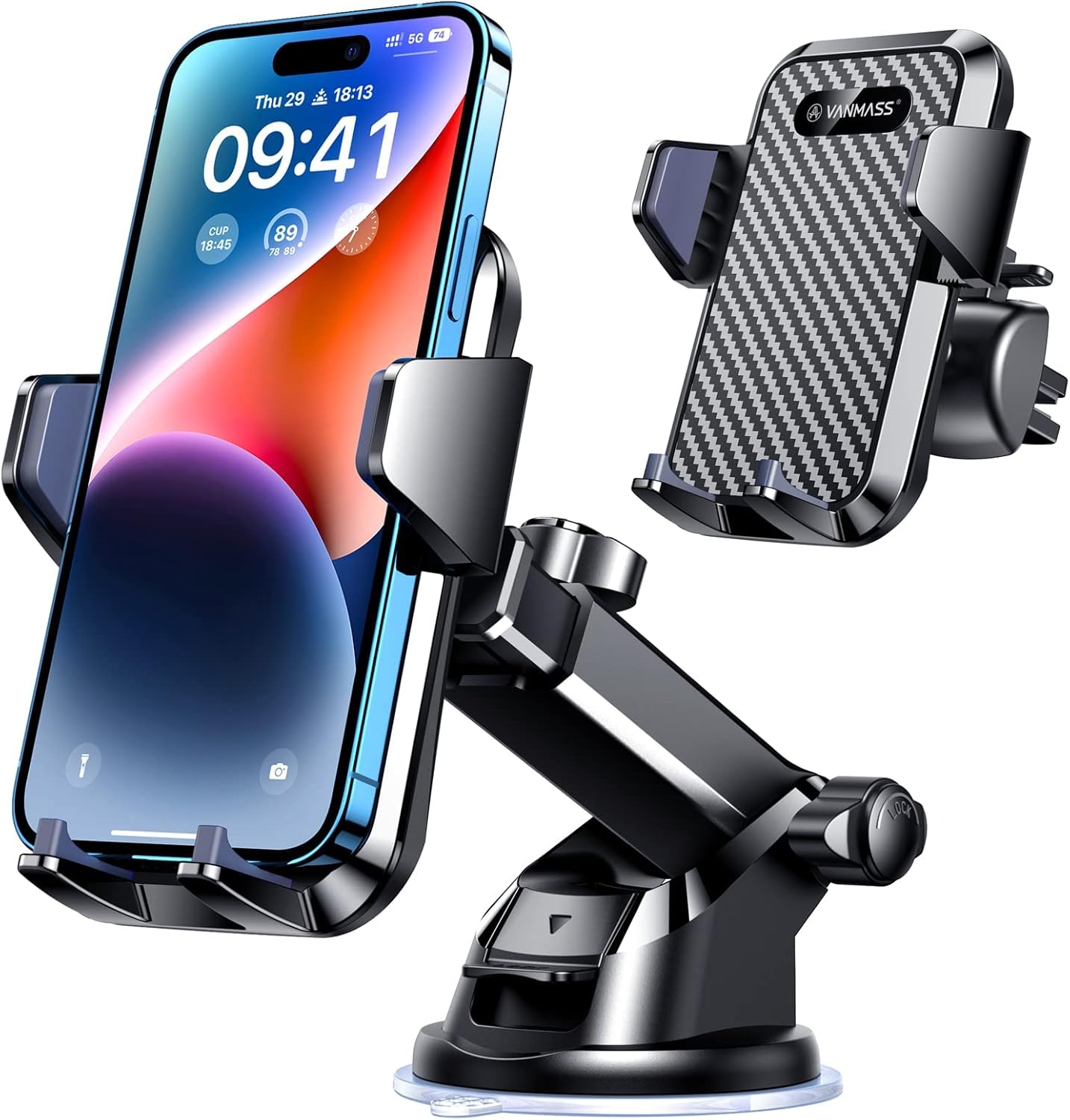
Days 1–4 rotation: steel-core vent clip and wide cradle in frame—dash pad week winner when smooth plastic cooperated and vent mode needed mid-week honesty on loose slats.
Check Price on Amazon“3-in-1” is not a feature. It is an apology for not knowing your car yet.
The honest question is whether each mode is a tool or a backup sticker:
Does dash suction stay boring after a hot parking lot, or does it ask for a ritual every Monday?
Does windshield mode put the phone where afternoon glare punishes you?
Does the vent clip lock on thin blades without the slow creep that makes you touch the mount at every red light?
Can you dock with one hand on day ten, or does the cradle start needing a second squeeze like it is tired?
If you are still choosing mount families, read MagSafe vs Clamp vs Suction: Which Car Phone Holder Should You Buy in 2026? and Suction Cup vs Vent Mount: When Which Is Better? before you buy three heroes.
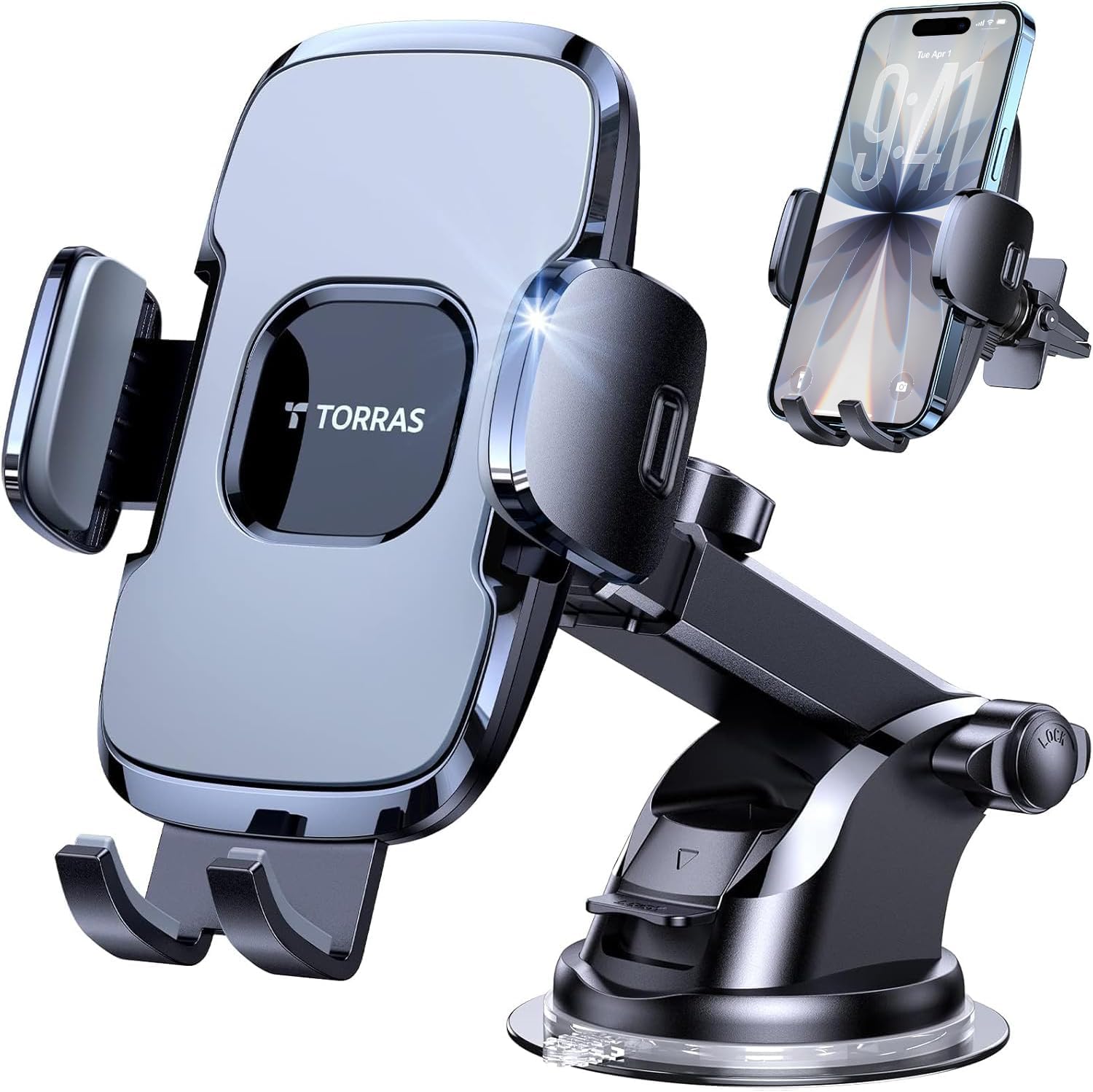
Days 5–8 hardware: triangular vent clip and one-touch cradle visible—screw-tight vent engagement and the best stop-and-go dock rhythm in the shootout when hands were tired.
Check Price on AmazonHow I ran twelve days without turning it into spreadsheet cosplay
Two cars. Car A: 2016 Civic with a smooth dash pad, a windshield that loves glare, and horizontal vents that wiggle when the fan hits high. Car B: crossover with grainy dash texture and stiffer vent blades.
Same notebook every commute:
First-try one-hand dock success at stoplights (rough count).
Correction touches per hour: doubt tilt versus something actually moved.
Surface prep honesty: did I wipe the pad or cheat because I was late?
Heat re-seat after parked-car bake (navigation still running).

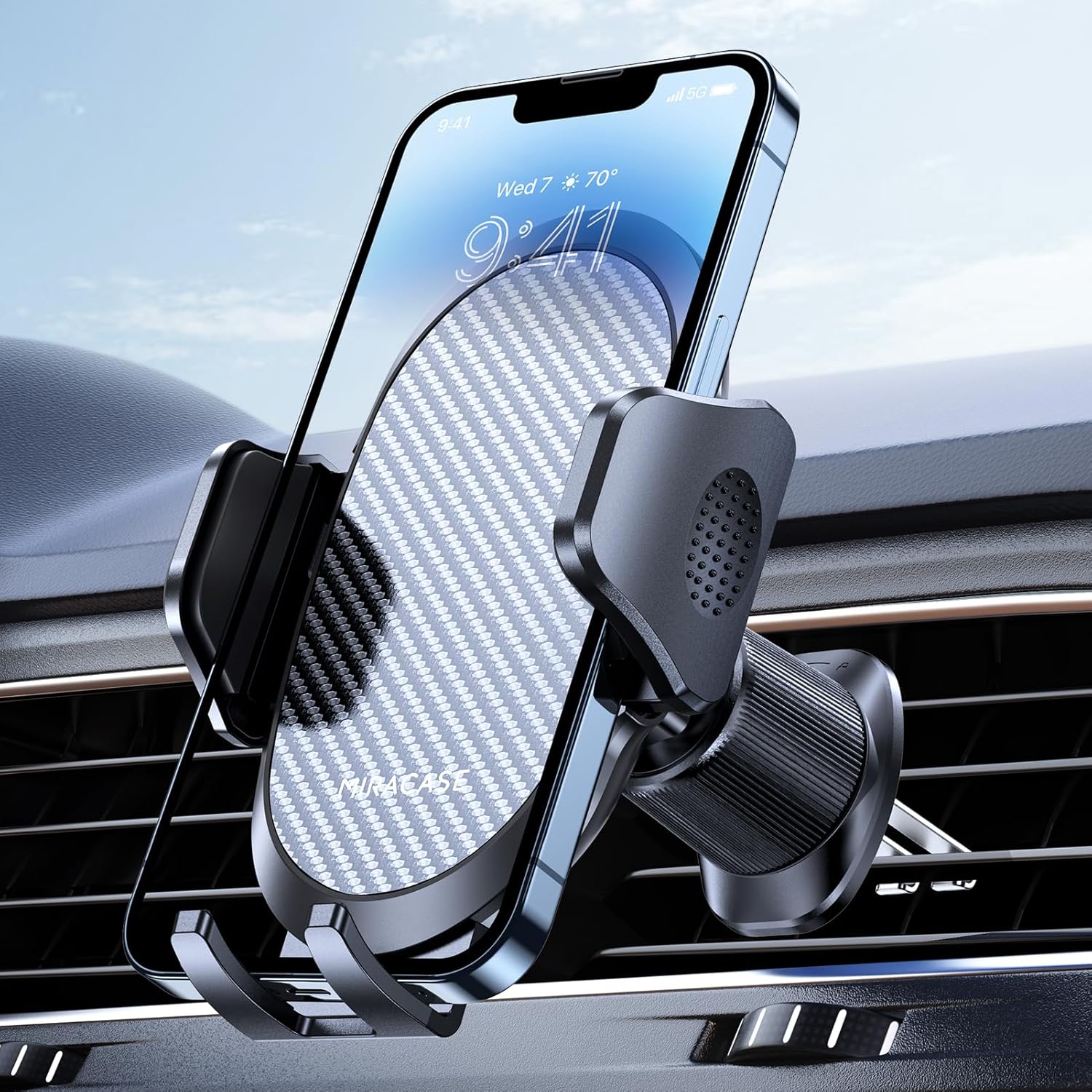
Days 9–12 closer: extended vent hook hardware in the photo—long-hook bite on stiffer crossover blades and thick-case forgiveness when family phones showed up Otterbox-proud.
Check Price on AmazonArm sag check on big phones in portrait navigation.
I rotated kits every four days so loyalty did not become science. Install ritual stayed boring: prep surface, mount base, tighten once, drive fifteen minutes, check once, stop fiddling.
Days 1–4: andobil week (dash first, vent when the pad lied)
I started with andobil because the steel-core vent clip story is what people buy 3-in-1 for—you want vent to feel like a real mode, not a plastic afterthought.
Dash pad mode on the Civic was the calmest win of the week. Prep with the included pad, press, wait like an adult, drive. The cradle swallowed a thick-case week borrowed phone without the two-hand ceremony cheap clamps demand.
Windshield mode earned its keep on a highway leg where I wanted height without MagSafe alignment drama. Arm sag showed up by day four if I maxed extension with a big phone— not a fall, just “tilt back one notch” energy.
Vent mode on loose slats needed discipline. Overtighten and you hear buzz at max AC. Under-tighten and brick roads invite creep. Mid-week check saved me from writing a dramatic failure story that was just loose hardware.
Full single-mount diary: andobil 89+LBS 3-in-1 Mount Review: 12 Days I Actually Drove (Dash, Glass & Vent Field Test).
Shootout recap shot: gray clamp kit on glass—windshield mode when dash texture lied and you still needed navigation height without trusting a textured pad.
Check Price on AmazonDays 5–8: TORRAS week (screw-tight vent and the triangle clip brag)
TORRAS week is when you discover whether “enhanced vent clip” means anything or is font choice.
The triangular vent engagement felt more positive on thin Civic blades than I expected from a gray plastic kit. I still re-checked tightness after the apology-road loop because vent mounts fail in the clip first.
Dash mode was strong on smooth pad, weaker on grainy crossover texture unless I used the adhesive disc path honestly. That is not a TORRAS insult. That is physics wearing textured trim.
One-touch dock speed stayed crisp through day eight, which matters more than pound claims when your commute is stop-and-go. Rough morning dock count across three days: twenty-nine tries, twenty-six clean first closes. The three misses were greasy hands, not weak jaws.
Windshield placement fought afternoon glare unless I dropped the arm one notch—same lesson as every long-arm mount, different brand.
Full single-mount diary: TORRAS 96+LBS 4-in-1 Mount Review: 12 Days I Actually Drove (Dash, Glass & Vent Field Test).
Days 9–12: VANMASS week (long hook vent and the “why is it loose today?” test)
I saved VANMASS for the last block because their extended vent hook marketing is the kind of sentence you only believe after a hot week.
The longer hook hardware felt meaningfully different on the crossover vents—more bite behind the blade, less of the left-right wander I see with short hooks by Wednesday.
Dash suction on the Civic pad was workhorse boring in the good way. Glass mode was stable for highway legs if I accepted a re-aim after heat parking. I am not claiming suction immortality. I am claiming fewer panic touches than cheap cups.
Thick-case forgiveness was the quiet win here. Family handoffs with Otterbox-proud phones did not turn into a group chat about “why won’t it close.”
If you run trucks or tall cabs, the sibling truck-branded kit is a different box. For this shootout I stayed on the standard VANMASS 3-in-1 clamp kit most commuters cross-shop. Truck cabin diary lives in the truck review lane: VANMASS 85+LBS 3-in-1 Mount Review: 12 Days I Actually Drove (Dash, Glass & Vent Field Test) (truck listing) versus VANMASS Suction & Clip Mount Review: 12 Days I Actually Drove (Dash, Glass & Vent Field Test) for the kit I rotated here.
Shootout scorecard in plain English
Best dash-pad stability on smooth plastic: andobil and VANMASS tied, TORRAS close if you use the disc on grainy trim.
Best vent confidence on thin horizontal slats: VANMASS slightly ahead, TORRAS second, andobil fine with mid-week tightening discipline.
Best one-hand dock repeatability: TORRAS and andobil tied, VANMASS close behind with thicker phones.
Best “I will actually use all three modes” honesty: andobil for balanced vent hardware, TORRAS for vent geometry fussiness, VANMASS for long-hook cabins.
Best budget alternative if this shootout feels expensive: read Romuto 3-in-1 Car Mount Review: 12 Days I Actually Drove Dash, Glass, and Vent (Field Test)—not in this rotation, but the same buyer mindset.
When 3-in-1 loses to simpler mounts
You only use one surface forever: buy for that surface instead of paying for two backup modes you will never install.
You run native MagSafe only and hate jaws: read the vent shootout and iPhone 17 New Phone Week: 14 Days I Actually Drove (Case Stack, MagSafe & Clamp Mount Field Test).
Your vents are round, vertical-only, or loose like rubber: clamp vent 3-in-1 is not your religion. Read Miracase Wider Clamp Vent Mount Review: 11 Days I Actually Drove (Thick Case Field Test) or CD-slot desperation: iOttie CD Slot Mount Review: 12 Days I Actually Drove (Easy One Touch Field Test).
Summer city traffic and heat drift context: Magnetic Vent Mount vs Suction Mount in Summer City Traffic: 14-Day Stop-and-Go Stability and Heat Drift Test and Memorial Day Heat-Soak Week: Parked-Car Suction, MagSafe, and Charging Re-seat Honesty in Early Summer.
What failed in ways that embarrassed me
Skipping surface prep at a gas stop, then blaming “weak suction” on a textured dash.
Running windshield mode at max arm length with a big phone, then calling arm sag a brand defect.
Assuming 3-in-1 means all three modes are equally good in my car without testing vent geometry first.
Rotating mounts without a fifteen-minute re-check drive after each install.
What worked like a boring professional
Pick primary mode for your car, keep the other modes as real backups—not fantasy features.
Re-tighten vent clips after the first rough-road afternoon, not after a dramatic highway story.
Track one-hand dock success for three mornings before you crown a winner.
Read One-Hand Docking Speed Test: 15 Mount Types Ranked by First-Try Success in Stop-and-Go Traffic and Mounting Surface Prep Test: 12 Cleaning Methods Compared for Suction Hold, Adhesive Grip, and 14-Day Stability.
Quick picks from the shootout
Best balanced 3-in-1 for mixed cabins: andobil if vent hardware and dash pad both matter.
Best vent-geometry fussiness wins: TORRAS when blades are thin and you will screw-tighten like you mean it.
Best long-hook vent confidence: VANMASS when crossover vents are stiffer but dash texture fights suction.
Best holiday and family chaos weeks: any of the three if you prep surfaces—see July 4th Weekend Field Test: Fireworks Traffic, Parade Detours, and Whether My Mount Survived the Holiday Stop-and-Go (10 Days I Actually Drove).
Who should slow down before checkout
Slow down if you have not tested your vent blade health. Fast checkout if you know you will rotate surfaces seasonally and want one box.
Skip 3-in-1 if you already know windshield placement is illegal or visually cursed in your state of mind—buy vent-only or dash-only instead.
What buyers are searching (and what matched my twelve days)
Common searches look like “best 3 in 1 car phone mount 2026,” “andobil vs TORRAS phone holder,” “VANMASS car mount review vent,” and “universal phone mount dash windshield vent.” My week matched the practical answers: surface prep picks the winner, vent geometry breaks ties, and pound claims are louder than arm sag discipline.
Final takeaway
A 3-in-1 shootout is not about finding the strongest suction headline. It is about which kit still feels boring on day eleven when your hands are greasy, your fan is loud, and your map is redraw every thirty seconds in stop-and-go.
If you only remember one sentence: buy the kit whose primary mode matches your car’s honest surface, then keep the backups as tools—not marketing stickers.
Hub checks: Best Car Phone Holder 2026: 10 Mounts I Actually Tested That Work (Not Hype Specs) and Best Car Phone Holders by Driver Type: Commuter, Rideshare, Truck, Family, and Delivery Use Cases (2026).
Father’s Day install reality if you are buying for someone else’s cabin: Father's Day Car Phone Mount Gifts I Actually Installed: What Fit Dad's Car (2026 Field Test).
The honest close
I entered this week trying to pick a strongest-pound champion. I left with a calmer rule: the best 3-in-1 is the one you install correctly once, re-check once, and stop touching unless something actually moved.